By Matan Klinger, Director of Lean Construction
Lean methodology is no new concept in construction, but fully embracing the mindset and adopting the practices can have some surprising benefits. For everyone involved on a large-scale construction project – from owners to project teams to laborers – Lean practices can offer much more than just a reduction in waste on site and throughout the life of a build.
The construction industry as a whole is wasteful, which is why Lean methodology can make such a difference. Over my years of experience, I’ve spent a lot of time with job teams, walking sites, trying to understand the patterns and behaviors that work to make a project more efficient, and those that don’t. What’s interesting from my findings at Hoar Construction is that we don’t have wasteful teams. Our superintendents, project management staff, and field teams are working hard already. But there is always opportunity to work smarter, and that’s where Lean comes in. Here’s a detailed look at my recent findings within our own company, to help you look for opportunities to eliminate waste on your own projects.
8 Types of Waste
If you know anything about Lean construction, you’re probably familiar with the eight types of waste:
- Defects
- Overproduction
- Waiting
- Non-Utilized Talent
- Transportatio
- Inventory
- Motion
- Extra Processing
In my experience in this industry, I see these three types of waste come up more often than others.
1. Waiting
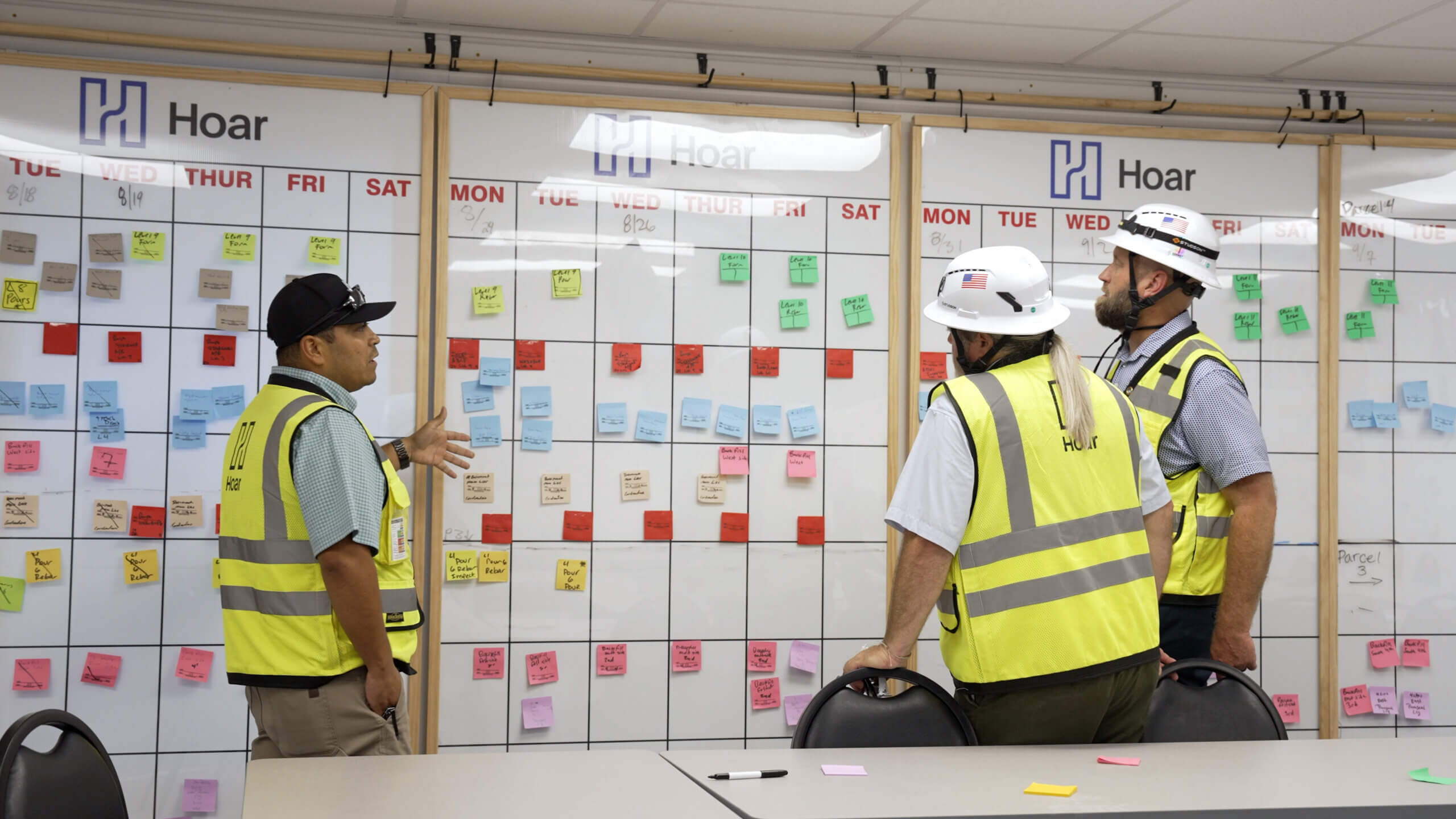
We are see waiting waste on jobs because of incorrect drawings or design delays, material delays, or even scheduling clashes. Every project has a different reason for waiting, and we’re working to address this through stronger communication with our project partners, weekly work plans, and especially trade partner communication. We don’t hold two schedules. There’s only one schedule, and it is exposed and transparent, which allows for better communication and collaboration across the board.
2. Motion
Motion waste comes into play most often when we’re talking about materials. Site conditions aren’t something we can easily control, so without large laydown areas, getting your tools or materials where you need them to work with on site can cause traffic jams or delays. Our teams are solving this with excellent visual management. Whether it’s our pull planning or schedule boards in our job trailers or even printed maps of the site showing access points and flow, these visual aids help teams and material move more easily across jobsites.
3. Defects
The third waste I see is related to defects. If equipment gets damaged or inspections get pushed because an area isn’t ready, these defects need to be addressed. This kind of waste ties directly back to budget and can stem from issues related to Waiting and Motion, as I already mentioned. We work hard every day to get owners and trade partners to talk our language, communicating and over communicating to try and prevent these issues before they arise and mitigate them quickly when they happen.
Ongoing Benefits to Lean Construction Methodology
Lean construction isn’t a one-and-done task. It’s an ongoing and evolving practice to reduce friction, improve communication, and deliver more predictable and successful outcomes on every project. When teams function at this higher level, everyone involved wins. But Lean success isn’t just about the dollar sign or delivering projects on time – though those are definitely benefits. Lean success offers several surprising benefits, across the board.
Work/Life Balance
When you can remove bottlenecks on construction projects and hit milestones with less friction, that often means more predictable schedules and less extra work for project teams. This can translate into a happier workforce because of that reliability. Trade partners learn to trust contractors and want to work with them again on their next project. This kind of synergy builds on itself and creates stronger teams and better outcomes for owners as well. Having a general contractor who has strong relationships with trade partners in this busy climate can secure top manpower for your project and reduce the potential for delays or poor-quality work.
Less Friction = Less Waiting = Better Financials
Building off of this work/life balance and job satisfaction, more predictability with our trade partners will eventually lead towards better rates for us, which can be reflected in the price for the next project or the next owner. When we’re all communicating at a high level and working with less waste, the downstream benefit leads to more profitability for our clients. The bottom line is, everyone wins with Lean – clients, employees, projects, and the industry as a whole. Hiring a general contractor who doesn’t ignore waste but embraces its existence and looks for ways to eliminate it is the best way to improve your next project’s outcomes and the environment for everyone.
To see more about our Lean Construction successes, watch this short video.